
about pilates
What is Pilates?
Pilates is a low-impact form of exercise that builds strength, flexibility and control through slow, precise movements. It starts with the deep postural muscles that support your spine and pelvis, building strength from the inside out.
-
Done regularly, Pilates can help you:
Strengthen the muscles that support your back
Improve your posture and body awareness
Feel steadier on your feet, with better balance
Move more freely, with better flexibility and joint mobility
Ease stress and tension through focused breathing
Feel confident in everyday movements, from gardening to carrying the shopping
-
The NHS recommends that adults over 65 do activities that improve strength, balance and flexibility on at least two days a week, and names Pilates as one way to do this.
The Royal Osteoporosis Society says Pilates can help maintain bone strength, improve muscle strength and balance, and help with pain and posture, with some movements adapted to protect your spine.
-
Pilates can be adapted to almost any age, body or fitness level. It's especially helpful if you:
Are new to exercise, or returning after a break
Live with back pain
Have osteoporosis or osteopenia, or want to look after your bone health
Want to stay strong, steady and independent as you get older
Are recovering from an injury, once your doctor or physio is happy for you to exercise
Play sport, run or dance, and want to add strength and control to your training
the pilates works approach
Our approach is physiotherapy-informed. Before you join a class, Rosie recommends a one-to-one induction, so we can understand your body, your history and your goals.
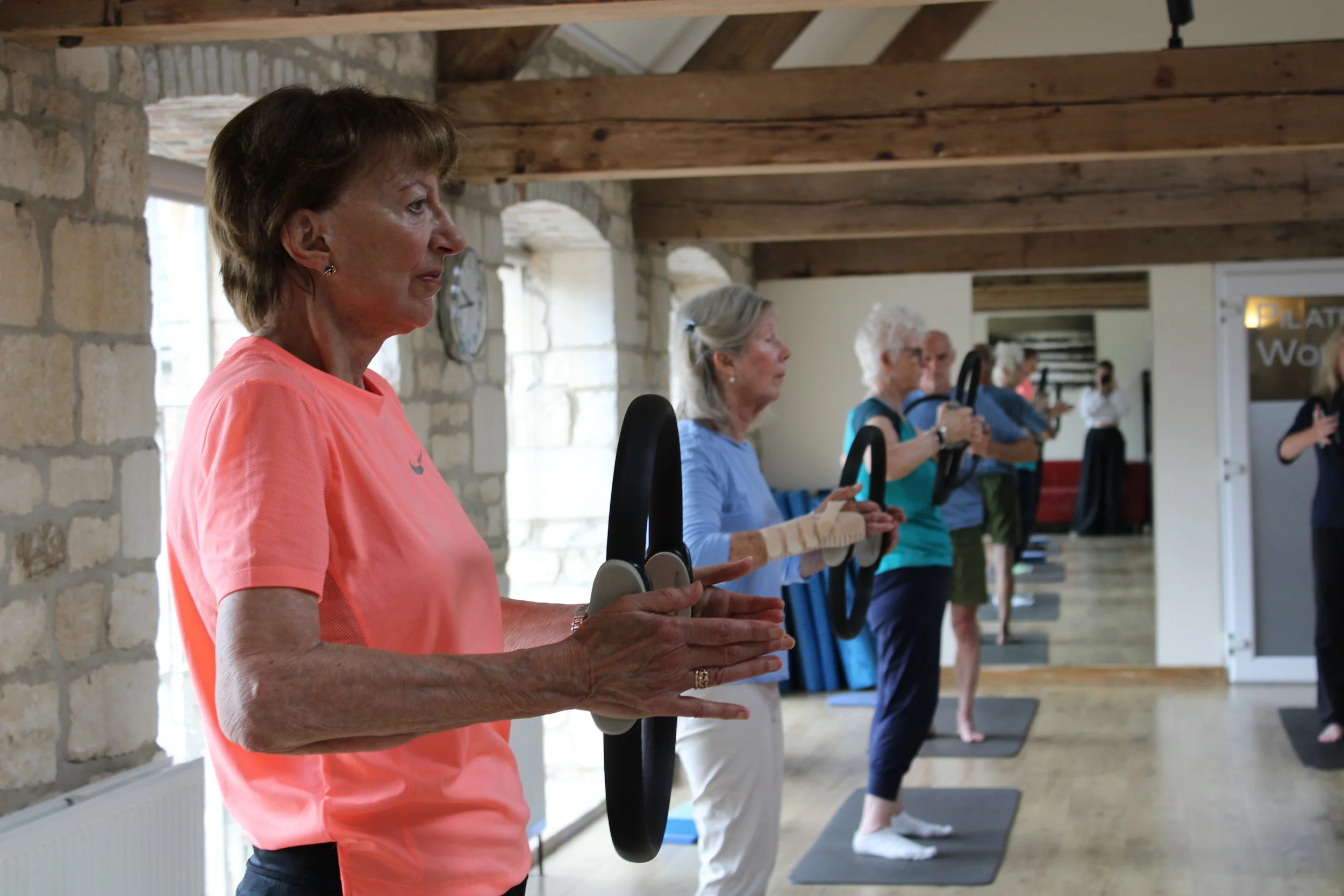
From there, our highly qualified teachers adapt every exercise to you, whether you join a Beginners class, a specialist Bone Health or Older Persons class, or continue with one-to-one sessions.
Your Questions, Answered.
-
No. Every exercise can be made easier or harder, so you always work at the right level for you.
-
Pilates can be adapted for both, which is why we start with a one-to-one induction. If you're under the care of a doctor or physiotherapist, check with them before you start.
-
Both are low-impact and focus on breathing and body awareness. Pilates concentrates more on controlled strength and core stability, while yoga tends to focus on holding postures and flexibility.
-
Wear comfortable clothes you can move in easily, ideally not too baggy, so your teacher can see how you're moving.
Go barefoot or wear socks with grips on the soles, as ordinary socks can slip.
A light layer is handy for the start and end of class. We provide mats, so just bring a bottle of water.
-
Each class lasts 1 hour.